

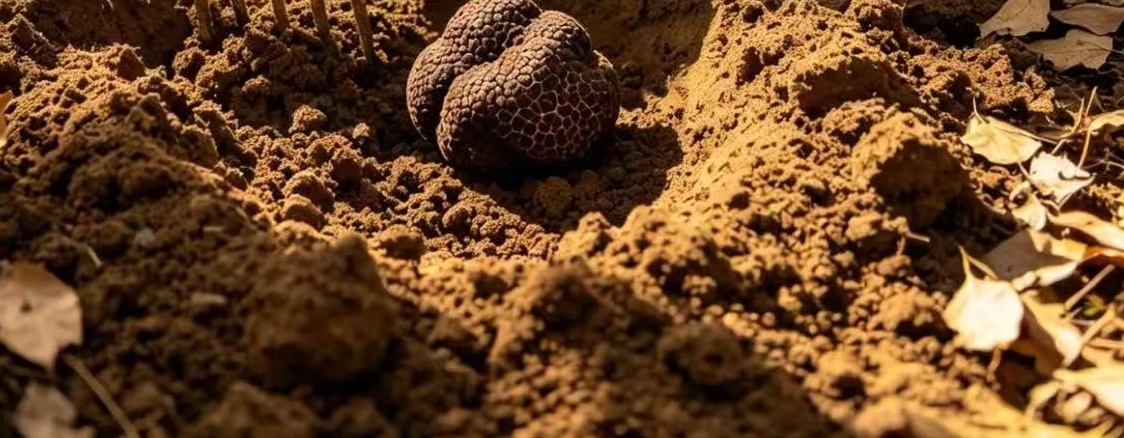

When we talk about truffle harvesting most people think of trained dogs or sows used in European truffle fields.. In Chinas top truffle-producing regions, Yunnan and Sichuan the harvesting process is completely different. It is an experience-driven tradition that has been passed down among local villagers for decades.
The local villagers in Yunnan and Sichuan do not use trained animals to find truffles. Instead they use a searching method that combines years of field knowledge with careful eco-friendly digging techniques. This method is the common way to find these prized underground fungi in Yunnan and Sichuan.
The Best Time to Harvest Black Truffles
The timing is very important for quality black truffles in Yunnan and Sichuan. Local harvesters strictly follow growing cycles and regional protection rules. The best time to harvest truffles is from early November through late February or early March of the next year. This is when black truffles are fully ripe, rich in aroma and firm in texture.
The local villagers in Yunnan and Sichuan follow rules to protect wild truffle resources and ensure sustainable growth. They do not harvest truffles from March to October. During this period young black truffles spread spores. If they harvest truffles too early it will destroy the mycelium and lead to a sharp drop in future yields. The local villagers only pick black truffles with a diameter of at least 1cm. They leave immature black truffles to continue growing.
How Villagers Find Black Truffles Without Trained Animals
The biggest difference between truffle hunting and black truffle harvesting in Yunnan and Sichuan is that the local villagers rely almost entirely on their own observation and experience to locate black truffles. They do not need trained dogs or pigs. After years of working in the mountains they have mastered actionable clues to spot black truffle-growing spots.
First they look for the host trees. Black truffles grow symbiotically with the roots of trees. So the local harvesters focus on areas under Yunnan pines, Huashan pines, oak trees, chestnut trees and hazelnut trees. These tree species provide the nutrients black truffles need to form
Next they read the soil and surrounding vegetation. Mature black truffles grow 5 to 20 centimeters underground. They push the topsoil upward to form cracked mounds. Another sign is a ” circle” around the tree base. Black truffles absorb most of the soil nutrients so grass and small plants in that area turn yellow and die off. Experienced harvesters can spot these patches from meters away.
Some veteran villagers also use their sense of smell. Ripe black truffles give off a earthy aroma that seeps through the soil especially on warm humid days. This combination of cues and subtle scent detection is far more effective than outsiders would expect.
Tools and Step-by-Step Digging Process
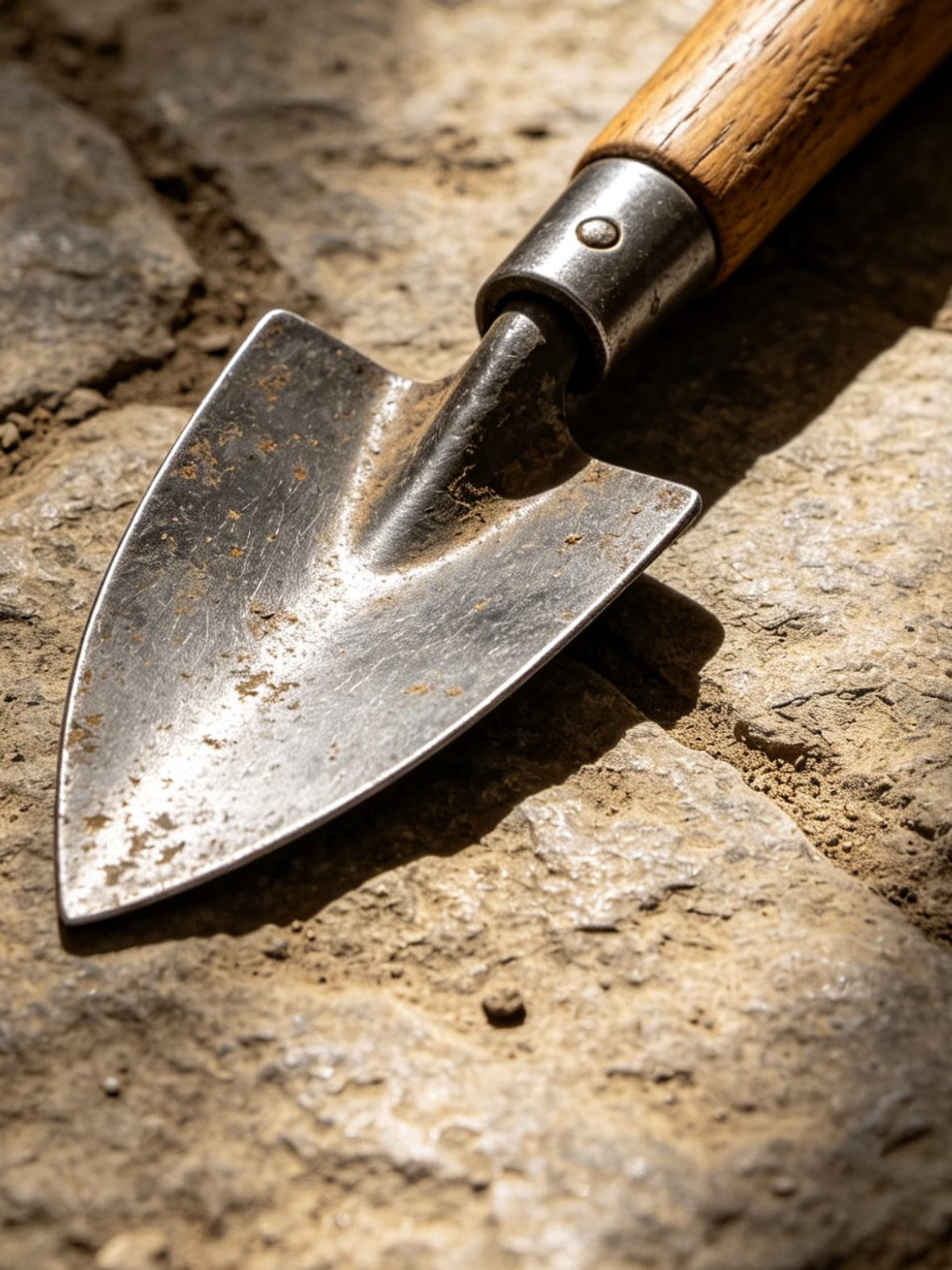
Black truffle harvesting in Yunnan and Sichuan is gentle and deliberate. The local villagers do not use tools. They only use a thin-toothed rake that is lightweight and designed to avoid damaging black truffle mycelium and tree roots. Here is the simple careful process they follow every time:
- Locate the truffle spot using the tree, soil and vegetation clues mentioned above and mark it gently with a small branch.
- Slowly rake away fallen leaves and loose topsoil never digging deep or too roughly.
- Once the black truffle is partially exposed, use hands to pull it out to avoid breaking or bruising the fungi.
- After picking the truffle immediately put the soil and leaves back into place pressing it down gently. This critical step protects the mycelium. Black truffles can regrow in the same spot next year.
- Place harvested truffles in a breathable bamboo or rattan basket keeping them cool and avoiding crushing.
In years a small number of commercial harvesters have started using trained local dogs to speed up the process.. This modern method is still a niche practice. Over 80% of truffles in Yunnan and Sichuan are still picked by hand using traditional techniques.
Eco-Friendly Harvesting: A Local Priority
Sustainable harvesting is not a choice but a strict rule for local villagers and regulators. Over-harvesting and destructive digging used to threaten black truffle populations. So now everyone follows protection guidelines: no digging in off-seasons no picking immature black truffles, no heavy tools like hoes or shovels and mandatory soil backfilling after harvesting. Many villages also adopt harvesting letting some forest areas rest for 2-3 years to restore black truffle growth.
Final Thoughts
Black truffle harvesting in Yunnan and Sichuan is a blend of traditional wisdom and practical eco-friendly practices. Unlike animal-led hunting it is a hands-on experience-focused craft that respects the natural growth cycle of black truffles. This traditional manual method not produces high-quality aromatic black truffles but also preserves the fragile forest ecosystem for years to come. For anyone looking to source authentic sustainably harvested black truffles understanding these local harvesting practices helps tell the story, behind every precious black truffle.
[…] most people immediately think of France or Italy. But in the past decade, China—especially Yunnan and Sichuan—has quietly become an important sourcing region for black […]