
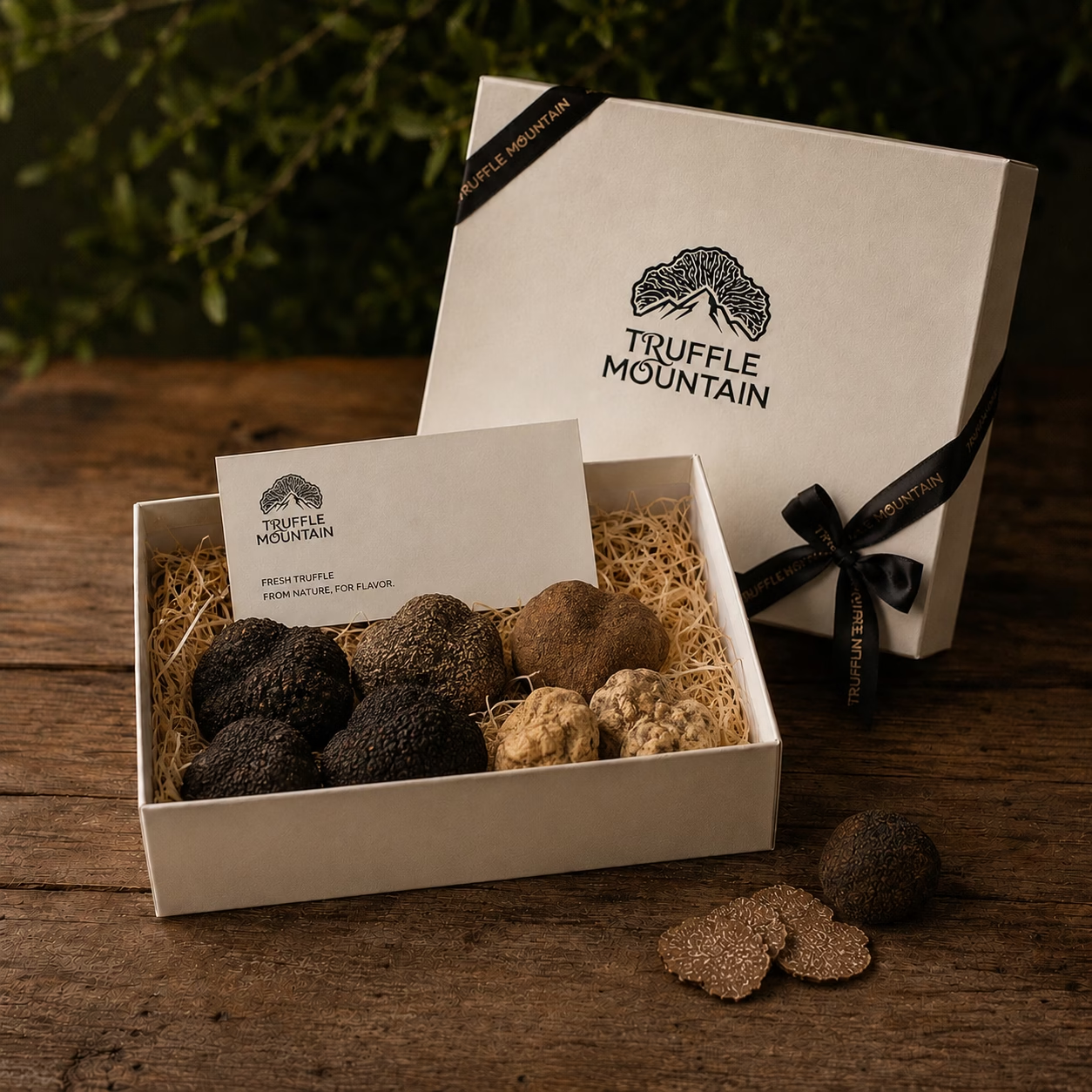

When buyers search for “how to import fresh truffles from China”, most of them are not actually looking for theory.
They want to know three things:
- Can China really supply consistent truffles?
- What is the real quality from Yunnan and Sichuan?
- How does the export process actually work in practice?
I’ve been working directly with wild truffle sourcing in Yunnan and Sichuan for years. So this article is not written from a textbook perspective—it’s based on real export cases, real restaurant orders, and real issues we face every season.
1. The Reality of Chinese Truffle Supply (Yunnan & Sichuan)
Most people outside China only hear about “Chinese truffles” as a single category.
But in practice, we mainly deal with two production regions:
Yunnan
- Larger volume
- More stable seasonal supply
- Common in export bulk orders
- Better consistency in size sorting
Sichuan (especially western mountain areas)
- Lower yield but often stronger aroma in early season batches
- More wild and less “commercially sorted”
- Smaller but high-quality lots for premium buyers
In export practice, many buyers mix both origins depending on price positioning and client type.
For example:
- Restaurants often prefer Sichuan early-season batches (strong aroma)
- Distributors prefer Yunnan for volume stability
2. The Biggest Misunderstanding About “Chinese Truffles”
One common misconception I still hear from new importers:
“Chinese truffles are lower quality, only Europe is premium.”
In reality, the issue is not “China vs Europe”.
The real difference is:
- Species
- Harvest timing
- Sorting standard
- Cold chain control
We mainly export Tuber indicum, which is different from European melanosporum, but not “useless” or “fake quality”.
What matters in real trade is:
- Freshness at dispatch (within 24–48h after harvest)
- Proper cleaning (too much washing reduces aroma)
- Temperature control during transport
Many quality complaints come from handling, not origin.
3. How We Actually Grade Truffles Before Export
In real export work (not theory), grading is very practical:
We usually separate into:
- A Grade: tight texture, strong aroma, export restaurant use
- B Grade: slightly softer, used for slicing or processing
- Small sizes: used for butter, oil infusion, or frozen export
Important point:
Many buyers think “bigger = better”.
But in restaurant usage, medium-size truffles often perform better because aroma distribution is more stable.
4. Seasonality (Very Important for Importers)
From Yunnan and Sichuan supply experience:
- Peak season: late summer to early winter
- Early season: stronger aroma but lower volume
- Late season: higher yield but slightly weaker aroma
The mistake many first-time importers make is:
ordering as if truffles are “always available like mushrooms in supermarket”
In reality, supply is seasonal and fluctuates weekly.
Serious buyers usually plan:
- 2–3 weeks rolling procurement schedule
- flexible size specification
5. How Export Actually Works (Real Process)
A typical export order looks like this:
- Same-day or next-day harvesting from mountain sourcing teams
- Initial cleaning (dry brush, not over-washing)
- Sorting by size + firmness
- Packing with breathable paper + cooling box
- Air freight (most orders go within 48 hours of harvest)
- Arrival inspection at destination airport
6. Common Mistakes Importers Make
From real buyer experience, I see these often:
Mistake 1: Over-focusing on origin label
They ignore handling quality.
Mistake 2: Expecting uniform European-style grading
Wild truffles are not agricultural factory products.
Mistake 3: No flexibility in size requirement
This often leads to supply delay.
Mistake 4: Not understanding aroma decay
Truffles are extremely time-sensitive products.
7. Why Many Distributors Are Now Considering China Supply
This is not theory—it is what we are seeing in real orders:
- Faster seasonal access
- Competitive pricing for restaurant chains
- Flexible bulk supply
- Increasing acceptance in secondary EU markets
Some of our long-term clients are now mixing:
- Italian/French origin (premium menu)
- Chinese origin (daily restaurant use)
This hybrid sourcing model is becoming more common.
Conclusion
Importing fresh truffles from China is not complicated—but it is very time-sensitive and process-sensitive.
From a supplier’s perspective in Yunnan and Sichuan, the key is not “selling a product”, but managing:
- freshness
- timing
- grading consistency
- logistics coordination
If these four points are handled correctly, Chinese truffles can fit well into many commercial restaurant and wholesale systems.
FAQ
Q: Are Chinese truffles safe for export restaurants?
Yes, when properly handled and shipped within cold chain requirements.
Q: What is the main difference between Yunnan and Sichuan truffles?
Yunnan is more stable in volume; Sichuan often has stronger aroma in early season.
Q: How long do fresh truffles last after arrival?
Usually 10–15 days depending on storage temperature and maturity stage.
Related Articles:
- China Black Truffle Season Guide 2026: Fresh Truffle Harvest & Supply Planning
- The Difference Between Tuber Indicum and Tuber Melanosporum: A Practical View from the Truffle Trade
- Why Yunnan and Sichuan Is Becoming One of the World’s Important Truffle Regions
- European vs Chinese Black Truffles: A Wholesale Buyer’s Comparison
- Why More Distributors Are Sourcing Truffles from China
- Fresh Black Truffle Wholesale: What Buyers Should Know Before Ordering
- How Fresh Truffles Are Packed for International Shipping
[…] 👉 Buyers planning imports may also find useful information in:How to Import Fresh Truffles from China: A Supplier’s Real Experience from Yunnan and Sichuan […]
[…] How to Import Fresh Truffles from China […]
[…] How to Import Fresh Truffles from China […]
[…] A real supplier breakdown of how fresh black truffles are packed and shipped internationally from China, including cold chain handling, grading, and export logistics from Yunnan and Sichuan. […]
[…] Yunnan for stability + Sichuan for premium positioning […]
[…] How to Import Fresh Truffles from China: A Supplier’s Real Experience from Yunnan and Sichuan […]
[…] How to Import Fresh Truffles from China: A Supplier’s Real Experience from Yunnan and Sichuan […]
[…] Yunnan supports stable supply MOQ, Sichuan supports premium batch MOQ. […]