

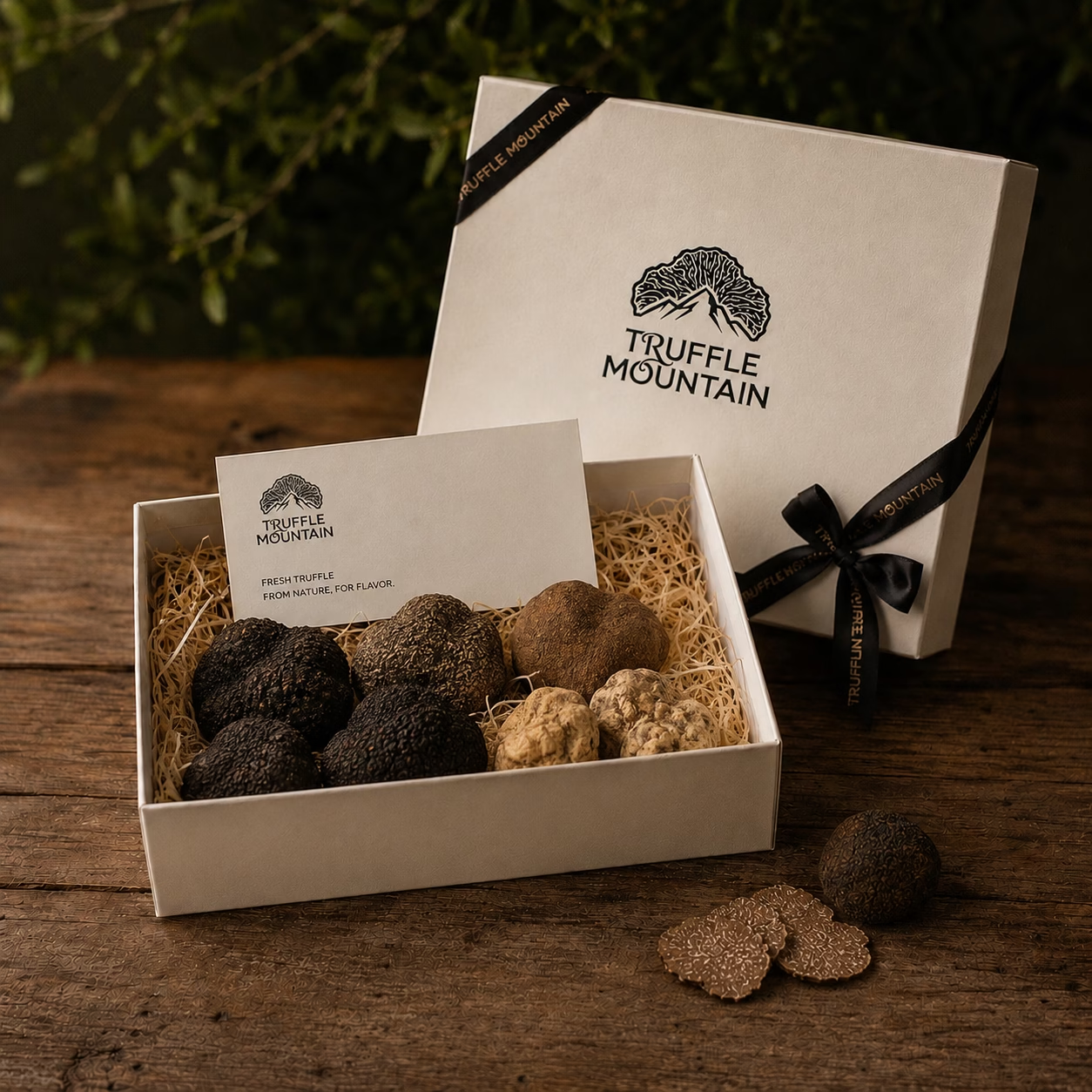

A supplier-side explanation of why more distributors and restaurants are sourcing fresh truffles from China, including pricing structure, seasonal advantages, and real supply chain behavior from Yunnan and Sichuan.
Over the past few years, we’ve noticed a clear shift in the truffle market.
More distributors, wholesalers, and even restaurant groups are starting to source fresh truffles not only from Europe—but also from China, especially from Yunnan and Sichuan regions.
This is not a marketing story. It is something we see directly in daily export orders.
The reason is simple:
The global truffle supply chain is changing based on cost, seasonality, and flexibility—not tradition.
1. The Real Reason: Supply Stability Matters More Than Origin
Many buyers used to focus only on origin:
- Italy = premium
- France = luxury
- China = alternative
But in real wholesale business, distributors care more about:
- Weekly supply availability
- Price stability during season
- Flexible grading options
- Fast shipping response
Chinese truffle supply (especially Yunnan and Sichuan) is increasingly attractive because:
- Harvest volume is more stable in peak season
- Multiple grading options are available
- Export logistics are faster than many assume
2. Yunnan & Sichuan Give Two Different Supply Advantages
From supplier experience, China is not a single sourcing point.
Yunnan advantage:
- High volume output
- Suitable for continuous wholesale contracts
- Better for distributors managing multiple restaurant clients
Sichuan advantage:
- Strong aroma early-season batches
- Preferred by premium chefs
- Smaller but higher-value lots
Many serious buyers now combine both:
3. Price Flexibility Is a Hidden Advantage
One of the biggest reasons distributors switch sourcing:
European truffle supply often has tighter pricing floors.
Chinese sourcing allows:
- More flexible grading mix
- Negotiation based on weekly harvest
- Better entry pricing for new markets
For distributors, this means:
- Lower risk inventory
- Easier restaurant onboarding
- More margin control
4. Restaurant Demand Is Changing the Market
We are also seeing a shift on the demand side.
Modern restaurants are:
- Using truffles in multiple menu levels (not just luxury dishes)
- Requiring year-round supply planning
- Mixing origins in one menu strategy
For example:
- Premium dishes → European truffle
- Daily menu items → Chinese truffle
This hybrid model is now very common in Europe and emerging markets.
5. Logistics Improvements Changed Everything
In the past, distance was a problem.
Now the situation is different:
- Faster air freight routes from China
- More stable cold-chain packaging systems
- Improved export coordination from sourcing regions
This has significantly reduced the gap between harvest and delivery.
For fresh truffles, timing matters more than geography.
6. The Real Competitive Factor: Not “China vs Europe”
From a supplier perspective, this is the most important point:
The market is no longer “China replacing Europe”.
It is:
Different sourcing origins serving different price layers and restaurant needs.
Smart distributors are not switching—they are diversifying.
7. What Experienced Buyers Look for in China Supply
We work with different types of buyers, and the serious ones usually focus on:
- Weekly supply consistency
- Honest grading (no over-promising size uniformity)
- Fast communication during harvest season
- Flexible shipment planning
They do NOT focus only on price.
Conclusion
The increase in truffle sourcing from China is not a trend—it is a structural shift in how global truffle distribution works.
From Yunnan and Sichuan, we see a clear reality:
Buyers are no longer asking “where is the best origin”, but “how can I build a stable supply system”.
China has become part of that system—not a replacement, but an additional supply layer.
FAQ
Q: Is Chinese truffle replacing European truffle?
No. It is becoming part of a multi-origin sourcing system.
Q: Why do distributors choose China?
Mainly for supply flexibility and seasonal availability.
Q: Is quality consistent?
It depends more on grading and handling than origin itself.
Related Articles:
- China Black Truffle Season Guide 2026: Fresh Truffle Harvest & Supply Planning
- Fresh Black Truffle Wholesale: What Buyers Should Know Before Ordering
- The Difference Between Tuber Indicum and Tuber Melanosporum: A Practical View from the Truffle Trade
- Why Yunnan and Sichuan Is Becoming One of the World’s Important Truffle Regions
- European vs Chinese Black Truffles: A Wholesale Buyer’s Comparison
- How to Import Fresh Truffles from China: A Supplier’s Real Experience from Yunnan and Sichuan
[…] Why More Distributors Are Sourcing Truffles from China […]