
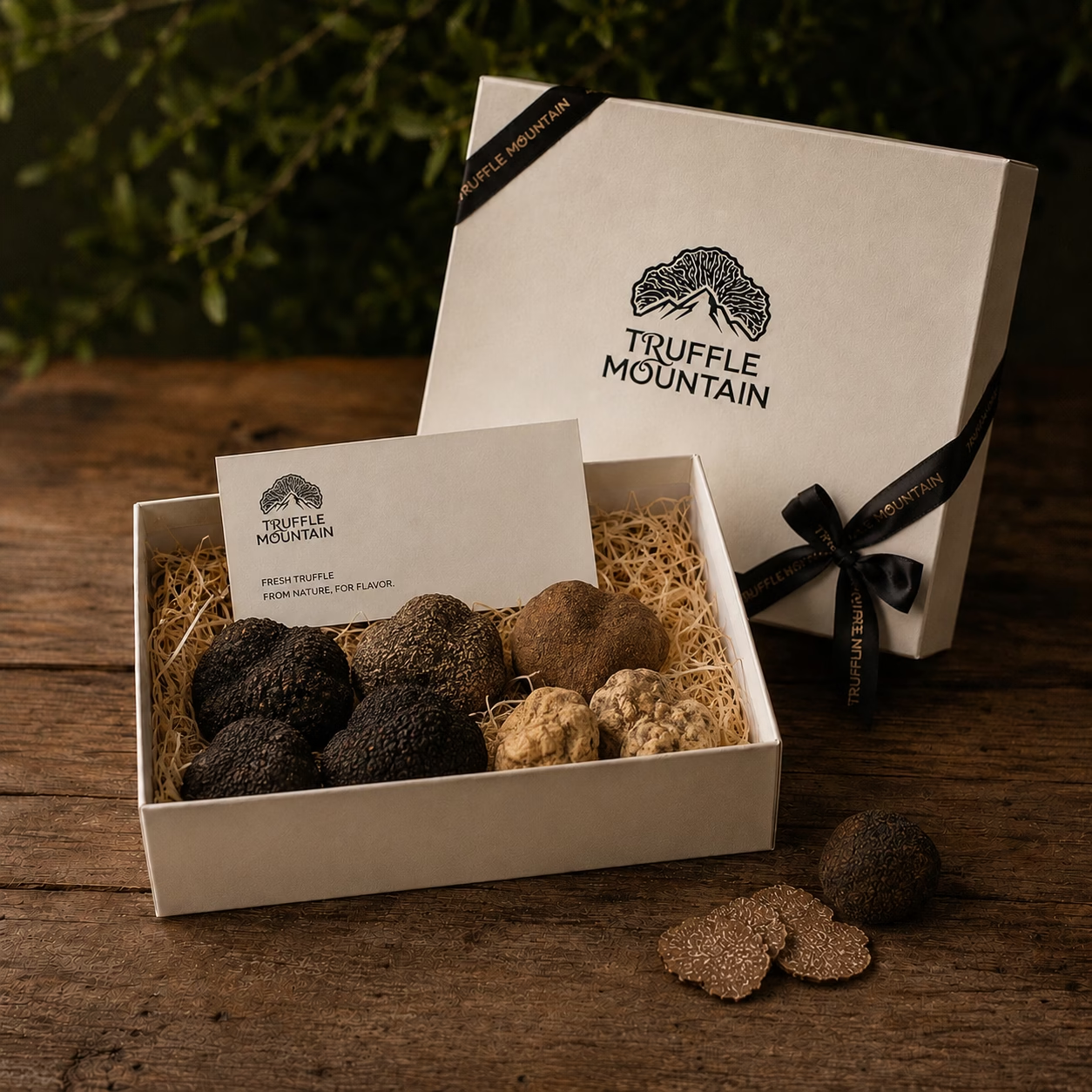

In the truffle business, comparisons between Tuber indicum and Tuber melanosporum come up almost every season.
Many buyers, especially those new to the industry, naturally ask:
From a trading perspective, this is actually a more practical discussion than many people think.
After working with buyers from restaurants, distributors, and food wholesalers in different countries, we’ve noticed something interesting:
Most professional buyers are not only focused on origin names anymore. They care more about how the product performs in real commercial use.
And this is one reason why more markets are gradually becoming comfortable with Chinese truffle products.
Understanding Tuber Indicum
Tuber indicum is commonly known as Chinese black truffle and is mainly harvested in Yunnan and Sichuan during the winter season.
👉 Buyers unfamiliar with the production regions can also read our article:
Why Yunnan and Sichuan Is Becoming One of the World’s Important Truffle Regions
Over the past few years, export demand for Tuber indicum has grown steadily, especially in:
- Asia
- Middle East markets
- restaurant supply chains
- hotel dining groups
In our experience, this growth is not happening because buyers suddenly stopped liking European truffles.
It’s happening because many buyers realized something practical:
For a large number of dishes, the final customer experience is not dramatically different.
The Reality in Restaurant Applications
Of course, in very high-end fine dining or dishes built entirely around truffle aroma, Tuber melanosporum still has its own market position.
But outside of that niche, many restaurants today are using truffle in a much more practical and flexible way.
In Europe and North America, a large number of restaurants are no longer using truffle only for luxury tasting menus. Truffle is now commonly added into:
- pasta
- risotto
- pizza
- butter sauces
- scrambled eggs
- burgers
- truffle fries
- cream-based dishes
In these kinds of applications, many chefs are paying attention to:
- consistency
- food cost
- stable supply
- overall customer experience
And from what we see in the export business, Tuber indicum works very well in many of these commercial kitchen environments.
To be honest, outside of a few very aroma-focused dishes, many end customers cannot clearly tell the difference once truffle is combined with other ingredients and cooking methods.
This is one reason why more restaurants are becoming open to Chinese truffle products.
For many restaurant groups, the goal is not to create the most expensive truffle dish possible. The goal is to create dishes that:
- taste good
- remain profitable
- can stay on the menu consistently throughout the season
👉 Some buyers also look at practical applications like:
- Truffle Pasta and Cream Sauce Applications
- Fresh Truffle for Pizza and Casual Dining Menus
- How Restaurants Increase Menu Value Using Fresh Truffle
to better understand how Tuber indicum is used in modern restaurant operations.
Aroma Differences — But Also Market Reality
Tuber melanosporum generally has a stronger and more concentrated aroma profile.
That part is true.
But in actual commercial kitchens, dishes are rarely built around aroma alone.
Restaurants are balancing:
- ingredient cost
- customer expectations
- menu pricing
- consistency
A milder truffle profile can actually be easier to work with in many modern menus, especially in Asian fusion, hotel buffets, and casual premium dining.
Some chefs even prefer a more controlled aroma that doesn’t overpower the rest of the dish.
Why More Buyers Are Accepting Chinese Truffle
Ten years ago, many buyers were cautious about Chinese truffles.
Today, the market is changing gradually.
There are several reasons:
- better export handling
- improved cold chain logistics
- more stable grading standards
- increased buyer familiarity with Tuber indicum
But probably the biggest reason is simple:
Restaurants need products that make business sense.
In many cases, Tuber indicum allows buyers to:
- offer truffle dishes at more accessible prices
- develop larger menus
- maintain better profit margins
- introduce truffle to new customers
From a distributor’s perspective, this matters a lot more than online debates about “which truffle is superior.”
Supply and Commercial Stability
Another advantage buyers often mention is supply flexibility.
China has become one of the world’s important sourcing regions for fresh black truffle, especially during peak season.
👉 Buyers planning imports may also find useful information in:
How to Import Fresh Truffles from China: A Supplier’s Real Experience from Yunnan and Sichuan
and
China Black Truffle Season Guide 2026
Understanding harvest timing and logistics is often just as important as understanding flavor differences.
Final Thoughts
Tuber melanosporum will always have a strong reputation in traditional fine dining.
But the global truffle market is becoming much broader than before.
Today, many restaurants and distributors are looking for products that combine:
- good presentation
- practical pricing
- stable supply
- flexible culinary use
And this is exactly why Tuber indicum continues to gain acceptance in international markets.
From our perspective in the export business, the discussion is no longer:
“Can Chinese truffle enter the market?”
The reality today is:
Chinese truffle is already part of the market, and more buyers are learning how to use it successfully.
Related Articles:
- China Black Truffle Season Guide 2026: Fresh Truffle Harvest & Supply Planning
- How to Import Fresh Truffles from China: A Supplier’s Real Experience from Yunnan and Sichuan
- Why Yunnan and Sichuan Is Becoming One of the World’s Important Truffle Regions
- European vs Chinese Black Truffles: A Wholesale Buyer’s Comparison
- How to Buy Fresh Truffle in Bulk: MOQ, Pricing and Export Details
- China’s Expanding Truffle Regions Are Reshaping the Global Supply Chain
- Why More Distributors Are Sourcing Truffles from China
[…] In wholesale fresh truffle business, the biggest gap between buyers and suppliers is not price—it is expectation. […]
[…] The Difference Between Tuber Indicum and Tuber Melanosporum: A Practical View from the Truffle Trade […]
[…] The Difference Between Tuber Indicum and Tuber Melanosporum: A Practical View from the Truffle Trade […]
[…] Black Truffle vs White Truffle: Real Differences You Should Know Before Buying […]
[…] The Difference Between Tuber Indicum and Tuber Melanosporum: A Practical View from the Truffle Trade […]
[…] 👉 Buyers comparing species and market positioning may also find useful information in:The Difference Between Tuber Indicum and Tuber Melanosporum […]
[…] The Difference Between Tuber Indicum and Tuber Melanosporum: A Practical View from the Truffle Trade […]
[…] The Difference Between Tuber Indicum and Tuber Melanosporum: A Practical View from the Truffle Trade […]
[…] The Difference Between Tuber Indicum and Tuber Melanosporum: A Practical View from the Truffle Trade […]